
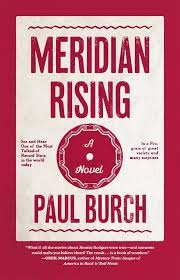
MERIDIAN RISING is PBs debut novel from the University of Georgia Press/New South Books and is based on the life of 20th century music legend Jimmie Rodgers, the sole artist voted into the Blues, Country, Songwriters, and Rock & Roll halls of fame.
Meridian Rising combines original research and creative panache to imagine the last days of the one-of-a-kind artist Howlin’ Wolf called “the man I really dug” and whose short career kicked off the modern music business, inspiring generations from Robert Johnson to Dolly Parton to Bob Dylan.
Visit the portals below to read more about Jimmie and the making of the album Meridian Rising in 2016 which features the redoubtable WPA Ballclub with Fats Kaplin, Billy Bragg, Tim O'Brien, Jack Silverman, William Tyler, Garry Tallent of the E Street Band, Richard Bennett, and Jon Langford of the Mekons & Waco Brothers. Read all about the stories behind the songs in Timeline in Song and discover the stranger-than-fiction true stories of the Blue Yodeler.
Tune in PB's conversations with music author and national treasure Peter Guralnick and Peabody Award winning reporter and former NPR correspondent Melissa Block.
Buy a signed copy of Meridian Rising here!
Praise for Meridian Rising
IBMA 2026 Writer of the Year nominee
Foreword Reviews Silver Award, Literary Book of the Year 2025
Bluegrass Situation Notable Book of 2025
What if all the stories about Jimmie Rodgers were true—and someone could make you believe them? The result—from days at Coney Island to Rodgers asking Delta blues king Charley Patton, traveling as Elder J. J. Hadley, to preach at his funeral, and Patton, with one more year to live than Rodgers, previewing a one-train-to-heaven one-train-to-hell sermon on the spot—is a book of wonders.
--Greil Marcus, author of Mystery Train: Images of America in Rock ‘n’ Roll Music
Meridian Rising is such a unique book, a complicated and genre-bending examination of a nearly mythical artist. Paul Burch, a brilliant singer and songwriter in his own right, has enough reverence and knowledge of the material to construct this 'memoir' of Jimmie Rodgers, but he also knows how to bend it in ways that make it sing a new tune, one you find yourself humming along to before you get to the end.
--Kevin Wilson, author of "Now Is Not the Time to Panic"
Evoking the emerging music culture of early twentieth-century America, [Jimmie Rodgers's] story is told here via imagined memoirs, letters, historical photographs, and fictional interviews with his friends, fellow musicians, and business associates. . . . Meridian Rising is an imaginative, insightful biographical novel about an inimitable musician who had a fascinating influence on American music.
-- Kristen Rabe, Foreword Reviews, Silver Award Literary Book of the Year
Few writers immerse themselves in the worlds they bring to the page as thoroughly and imaginatively as Paul Burch has in this fictionalized account of the life of country music originator Jimmie Rodgers. A musician and scholar of the sweet spot where country meets blues and jazz, Burch goes beyond conventional narrative to bring this complicated legend to life, capturing Rodgers' own voice and surrounding it with a chorus of collaborators, music-biz types and loved ones. Immersive and surprising, Meridian Rising points toward new ways of keeping music history alive.
-- Ann Powers, NPR, author of Traveling: On the Path of Joni Mitchell
I’ve got a few friends who possess encyclopedic knowledge of the history of country music, and they can all tell you where the bodies are buried. Paul Burch can show you where the ghosts reside. --Steve Earle, songwriter, playwright, author
Wonderful! Meridian Rising is the best available book about Jimmie Rodgers. We get both internal and external perspectives on Rodgers and Burch makes the most of the device, providing a balanced portrayal, neither whitewashed nor damning, guaranteed to make right-wing and left-wing segregationists squirm, revealing both a fun-loving spendthrift and serious artist, prolific philanderer and devoted husband, doting father and restless wanderer.
--Geoffrey Himes, Hard Rain & Pink Cadillacs
Paul Burch’s kaleidoscopic novel, “Meridian Rising” tells a story in which every detail is sharp and every explanation becomes open to doubt. But there is more here than the jigsaw pieces of plot. Burch is a gifted story teller and here Memories and motives are always doubtful. In a musician’s world, what can be trusted are instruments and microphones that capture a performance, and masters that preserve it. -Clarion-Ledger
If I was expecting anything from this mad, mad book, it was a straightforward rendering of Jimmie Rodgers' short, familiar life—not an action-packed noir, complete with gangsters and gun battles, a traveling nurse with a satchel of narcotics, the thoughtful voices of sadly forgotten bluesmen, beautiful automobiles, an indictment of the recording industry, lost, grieving children, and a meditation on family. All in 247 pages. The result is a crazy-in-the-best way, long-overdue corrective: it saves Jimmie Rodgers from his own legend. --Tony Earley, author of Jim the Boy
Burch employs narrative devices like fictional interviews to create a very lived-in world, with a warmth and an empathy that doesn’t always come through in nonfiction music writing. The book began life as a collection of songs, and through the pressure cooker that was the pandemic lockdown, it's become a diamond of a story. -Nashville Scene
We'll never know what it was really like inside Jimmie Rodgers's rambling mind, but now that I've read Paul Burch's take on it in Meridian Rising,, I can't hobo my way back to reality. See ya 'round the watertank. –Robert Gordon, author of Respect Yourself: Stax Records and the Soul Explosion
Jimmie Rodgers comes a-yodelin' out of Paul Burch's novel as if he were with us today. This is a tour de force of musical imagination.
-Roy Blount Jr, author of Save Room for Pie
Paul Burch has made up the truth of Jimmie Rodgers's life better than any mere "facts" could ever convey—even though you'd have to be in possession of a million biographical facts to pull off this kind of vernacular Huck Finn sleight-of-hand prose magic. I suspect the sleight-of-hand has something to do with the fact that Burch is a musician himself. He played his tune in the key of rollicky, mixed in with all the sadness. From start to end, I didn't hear a false note on the page. From start to end, this felt like such an authentic American story, in sore need of a new telling
--Paul Hendrickson, National Book Award finalist and winner of the National Book Critics Circle Award
A colorful story of possibilities about the Mississippi native known as the Father of Country Music. . . . Burch brings an authenticity to this inventive tale about the birth of country music -- Suzanne Van Atten , Atlanta Journal-Constitution
Paul Burch assigned himself a difficult and audacious writing task: creating a fictional account of the life of country music legend Jimmie Rodgers through a multitude of voices, including Rodgers’ own. He meets the challenge with his bold novel. . . . [W]ith the richness of its story and its grounding in period detail, Meridian Rising fills a void. Burch’s fictional portrait is likely to become an indispensable resource for people interested in this icon of American music.
-- Jim Patterson, Chapter 16
“Burch must have done a great deal of research to deliver a story that feels so authentic, but research alone doesn’t make a good novel. The writing is what matters, and Burch skillfully renders a large cast of narrators throughout Meridian Rising, especially its main subject, whose witty, sometimes barbed voice is vivid and memorable." Chattanooga Free Press
Talkin' MERIDIAN RISING - A Novel with the University of Georgia Press
UGA: First, as a musician you put out an album about Jimmie Rodgers called Meridian Rising. Now, as a writer, you've written a novel about him with the same title. What led you to Jimmie Rodgers? What is it about his story that resonates so deeply with you?
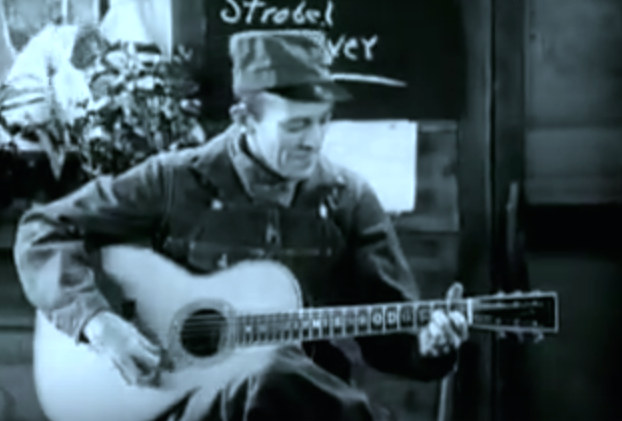
PB: I started writing about Jimmie on a whim as a way to reinvent my songwriting. At the time, I had just moved to Nashville. I had made a few records for small labels and my life was in a state of exaltation. I had married, started a family, and started my band, the WPA Ballclub. My first friends in town were the group Lambchop. And through them I met Vic Chesnutt and Yo La Tengo. We all had a lot in common. We loved to make records. And we were all—each in our own ways—experimenting with the songwriting form. I was also augmenting my sessions with people like Charlie McKoy who had played on my favorite records by Roy Orbison, Dolly Parton, and Bob Dylan. So, I was getting both formal expertise and practical expertise.
Making records for me has always been a grand pursuit, like what writing the great American novel once was. I had made an album called Last of My Kind which was loosely based on Tony Earley’s novel Jim the Boy and the experience of writing narrative songs was like flying. I had the sensation that I was on a new road that didn’t seem to have anyone else on it. I’m sure that wasn’t true, but it seemed true. So, I was keeping my ears open for a good idea when by coincidence I heard an unreleased session Jimmie made with a great blues guitarist, Clifford Gibson. At the same time, some new scholarship had come out about Jimmie’s friendship with Howling Wolf. That led me to think Jimmie had been undervalued in some way. I was attracted to the miraculous-ness of his life, his seriousness as an entertainer. I pondered the idea of writing from his point of view for almost a decade. I felt it was too interesting an idea to rush.
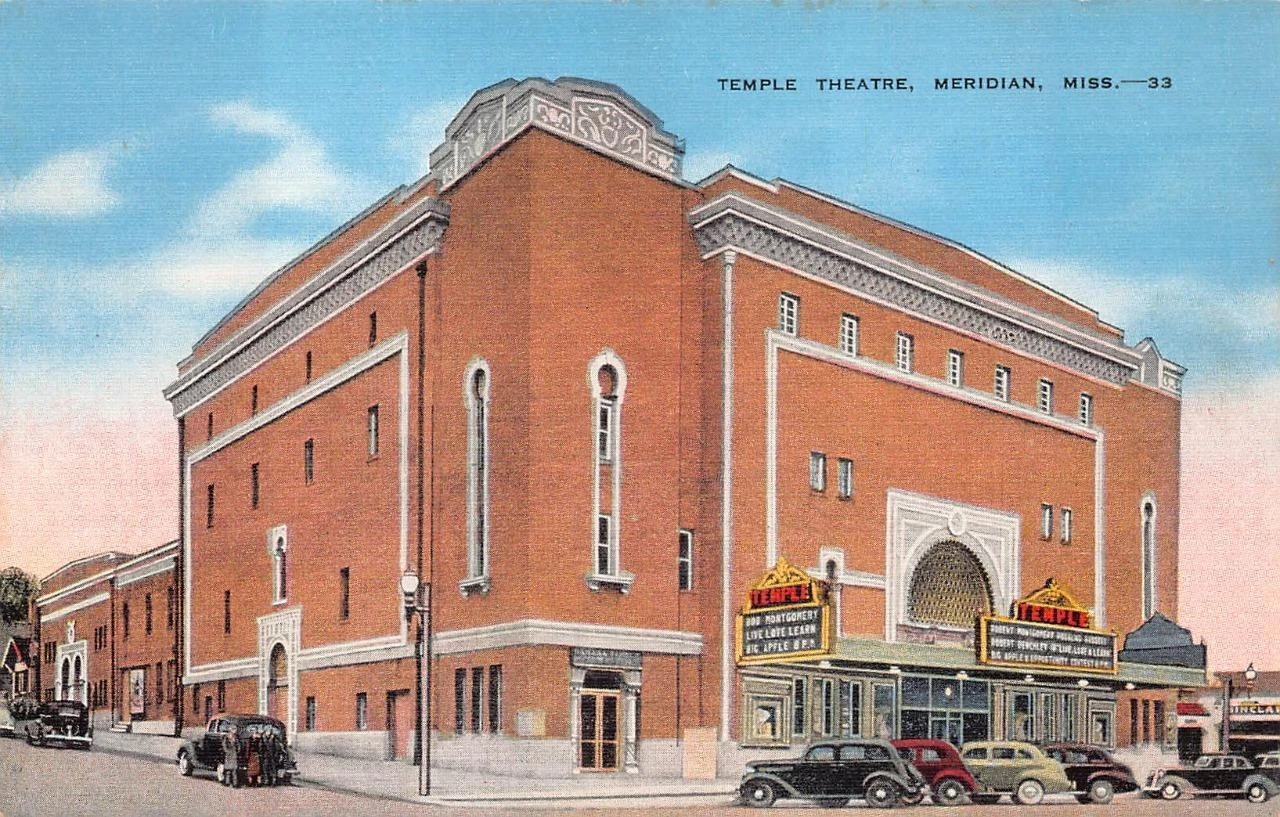
Eventually, the album Meridian Rising became a story about Jimmie as a person. As for writing the book, that too was written on a whim. And much like the album, many things happened at once. Several members of my family had suffered heartbreaking loss and were grieving, as was I. And the music business that I knew—the business that Jimmie helped create—had been sold out for pennies and was now broken for good. I think in the last decade, the art life, as David Lynch called it, was being kicked at, dismantled, and disparaged, reduced by corporations and faceless investors as a product, a widget. And whenever I pointed this out to someone they would answer: “You should write a book.” But writing a book seemed like an act of lunacy. I knew what it would take—the solitary confinement for hours at a time. It seemed writing a book was like voluntarily walking to the edge of a volcano to see how far you could lean over and still keep your balance. I thought, don’t most writers go mad after a couple books?
Early on, I had dozens of long writing sessions where I’d come back the next day and not recognize a single thing I had written, let alone bear to add punctuation. I’m even on the board of The Porch, the Nashville literary organization, and I didn’t dare tell them I was trying to write a novel. The whole thing just seemed like I was inviting madness. I was very aware, too, of popular musicians who wrote unserious books for quick cash. And I respected real writers too much to do something flimsy.
But then I had two visions: one of Jimmie sitting under a tree with a portable typewriter and the other, an older woman and a young girl on Coney Island beach, holding hands, and waving at a passing coast guard ship. So, I started there—at the beginning and the end. Eventually, I thought of the book as a very long Irish ballad. A defense of Jimmie as an artist and perhaps a defense for all of my fellow artists too. I became driven, through Jimmie’s voice, to stand up for creative souls. I felt like my choice to be an artist was on trial by people who had no expertise to judge anything. And so maybe by making the case for Jimmie as an artist I could make a case for all my fellow artists who were being disparaged. Perhaps that’s why Jimmie resonates with so many people long after he’s gone. He never quit. For him, music was a matter of life and death.
UGA: Jimmie is a hero to many well-known artists, but cultural memory is fading. Can you talk about what it was like for an artist in his day to make a name for themselves? What role did radio play? And what were the venues like where he played? What did being signed to a label (RCA Victor Records was Jimmie's label) mean for artists in those days?
PB: I think it was extremely challenging to make a national name for yourself as an entertainer in Jimmie’s time. Radio, though an enormous influence in its early days, had not yet transformed the music business. But Jimmie grasped the possibilities of the medium of records faster than many. Making records and being on a prestigious label provided a unique and modern path for him to becoming a full-time respected entertainer. He craved that respectability.
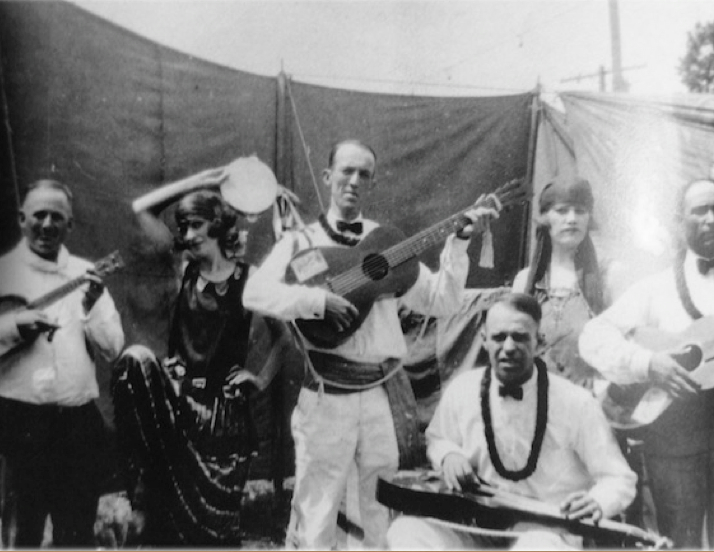
Though Jimmie was often invited to join prestigious traveling shows that performed in theaters, his tuberculosis often interfered with those commitments. Most of his performances were with old-style Vaudeville traveling tent shows. I suspect he did those to avoid the harsh northern winters and also because by performing in rural areas where he was the one and only superstar, he knew he would be afforded some maneuvering room if he got very sick. A barely solvent tent show that depended on Jimmie for revenue probably wouldn’t have the means to sue him if he had to leave the tour because of his illness.
Perhaps Jimmie’s greatest advantage in building a music career was being signed to RCA Victor. RCA was not only the king of labels with worldwide distribution but technically speaking, his records sounded better than his contemporaries on other labels. RCA invented the modern microphone. Jimmie also had the advantage of a forward-thinking producer and publisher in Ralph Peer. Peer and Rodgers were both hungry for respect and believed that American “popular” music was going to come from regular folks, not from opera. In that sense, if you consider “rock & roll” as playing what you love the best you can—a true “democratic” expression of what you feel—then Jimmie might be the first rock & roller.
UGA: Jimmie was famous for his yodeling, and many people associate yodeling with country music. But in the book, you write that he picked up yodeling from the Marx Brothers' mother. Is that how it really happened?
PB: It’s a historical mystery how and where Jimmie got his yodel. Emmett Miller has been cited as an influence, but the “break” in his voice (which Hank Williams copied) is completely different. I’ve heard no record by a white or Black singer with anything like Jimmie’s yodel prior to Jimmie’s debut in 1927. As far as I know, the source—if there is only one—is still a mystery. I read that the Marx Brothers’ mom used to tour with her sons and had her own spot in their show where she sang and yodeled. And they did tour the south quite a bit, including Alabama where Jimmie spent some time. As anyone who writes fiction knows, ideas come from all over the place. You’re always looking for an idea or an odd historical detail that might become a puzzle piece. So, who knows, I could be right!
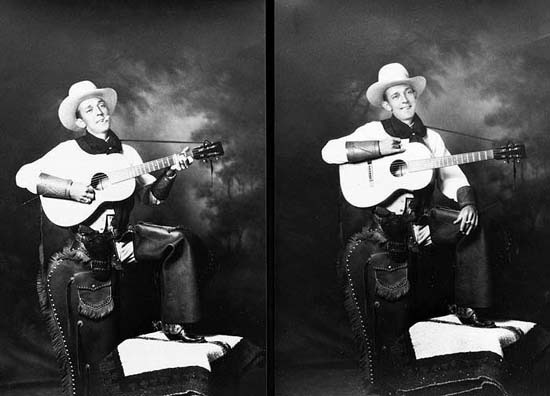
UGA: As a novel, Meridian Rising is obviously not meant to be a record of actual things that happened to Jimmie Rodgers. But it's also clear that you care about the truth of who he was, both as a person and an artist. What are some sources you drew on to fill out Jimmie's biography? In those moments where imagination had to take over, how did you approach channeling Jimmie for the page?
PB: My two main sources were Nolan Porterfield’s The Blue Yodeler and a vast collection of papers and letters at the Country Music Hall of Fame. In addition, I had help from Martin Guitars, the Jimmie Rodgers Foundation, Peer's biographer Barry Mazor, and a few other collections. To my ears, Jimmie had a great sense of humor and word play. If he were driving, he’d say he was “Cadillacin’.” If he was recording, he’d say he was “sessioning.” Without thinking too deeply about it, Jimmie’s voice came easy to me. It was easy to create a room around the facts to live in. He’s not an extension of me in any way. But I’d say we share a lot of the same sense of humor and empathy.
UGA: As you mentioned, Jimmie suffered from tuberculosis, which is what ultimately killed him. The disease hobbled him, but he lived with it for many years and worked constantly in spite of it. Was the specter of mortality what motivated him to do so much?
PB: In his letters and in the personal recollections by those who knew him, Jimmie comes across as a very hip, sly, but a relentlessly positive, upbeat, person. I also think he had to know he was pioneering something, though what he couldn’t say. He could see and hear his influence on the music business. He could hear how other musicians were affected, even inspired by his work. He had to know that destiny was looking him in the eye and perhaps giving him a peek into the future. Everyone has a crossroads. Jimmie had many. But he chose to stay a serious artist until the end. He was, in a sense, investing in a future he wouldn’t see. As Yogi Berra once said: if you see a fork in the road, take it.
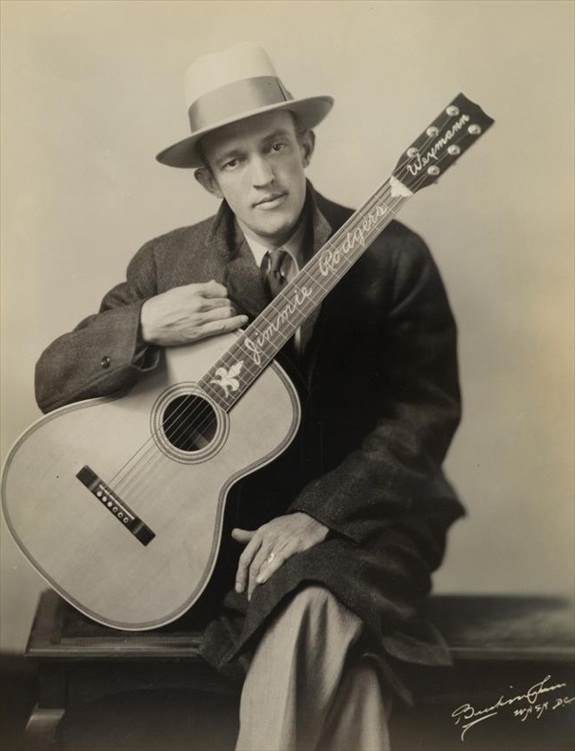
UGA: Can you talk a little bit about Jimmie as an artist? Who were his influences? How did the demands of being a professional musician change his approach? He's often referred to as the "Father of Country Music," but is that a label he would recognize?
PB: I think Jimmie is much closer to being a modern artist similar to Bob Dylan or David Bowie than one might suspect. Jimmie and Ralph Peer seemed fearless to experiment with different musical styles. I think that was largely due to Peer’s admiration of Jimmie as a kind of cross-over
artist—one of the first of his kind. And Peer desperately wanted to be an admired publisher in the popular circuit. Though some of their best ideas (and a few not-so-good recordings) were the result of Jimmie arriving empty handed for sessions because he was too sick to write or partying too hard to get his act together.
Ralph loved Jimmie’s gift for seamlessly blending rural and cosmopolitan tunes into a personal style. You could say Jimmie was one of popular music’s first “folk” stylists. Though he was not a writer like Loretta Lynn or Dolly Parton or Steve Earle with song ideas spilling out of his pockets, Jimmie was a creative person and a good co-writer. He often made small edits to other people’s songs that made them better.
Most of all, he sang every song with deep sincerity as if it were cut from his life. I think the influence to do so has to come from blues and Black Vaudeville—truth-telling songs that required the singer to step off a pedestal and meet their audience head-on. Prior to artists like Jimmie, singers “modeled” songs with their voice as if on a fashion runway. Jimmie in turn could subtly change the tone of his voice to accommodate the lyric, which made his style very personal. That was common in Black music and Black theater but totally uncommon in all other aspects of American music. To a great degree, thanks to the new invention of the microphone, Jimmie could translate his subtle style to record. He could “tell” the listener how he felt with just the slightest adjustment to his voice. John Lennon once said of Bob Dylan that you only had to hear Bob’s voice to know the emotional content of the song. Jimmie was no different.
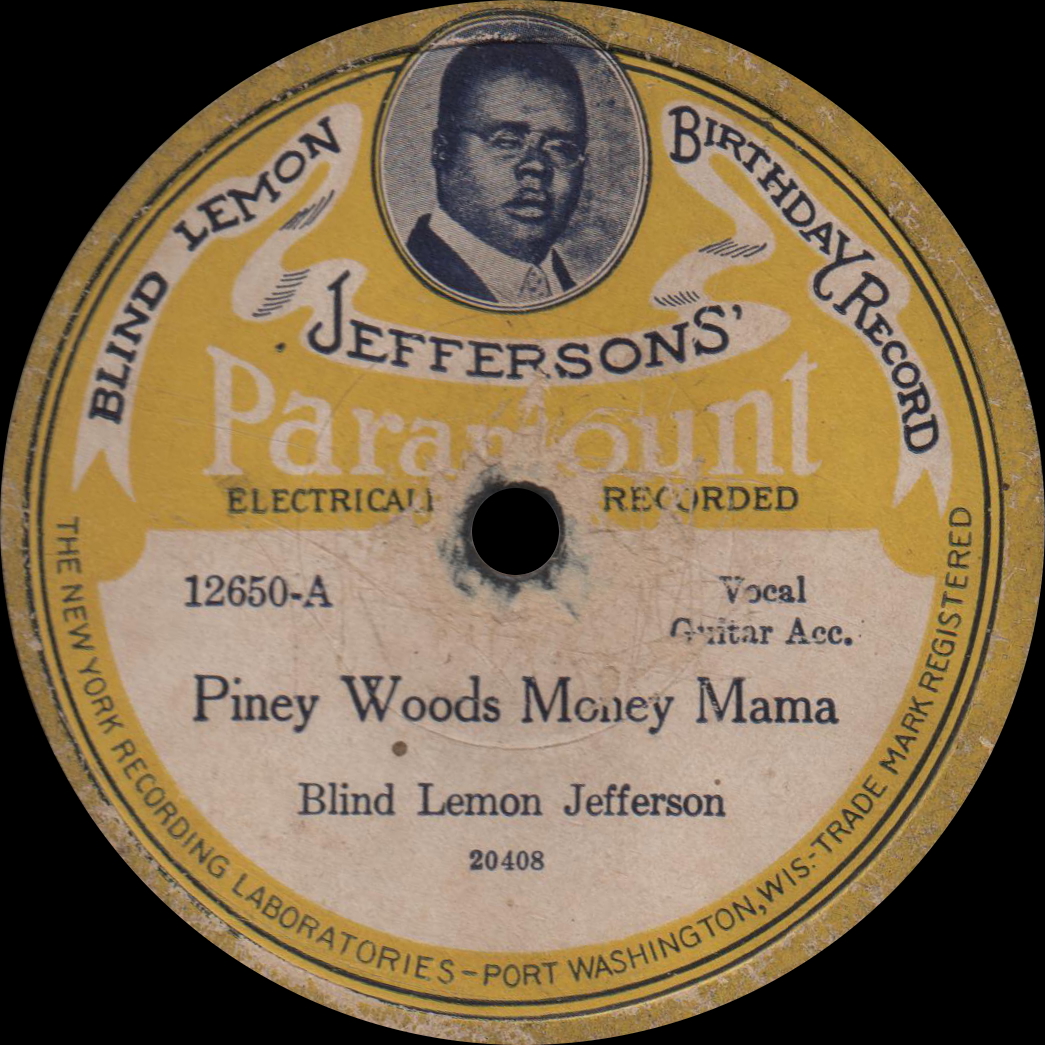
It’s a little difficult to know who Jimmie’s actual influences were. The one artist whose lines show up in Jimmie’s songs more than once is Blind Lemon Jefferson. We do know that Jimmie bought a lot of records. Which was unusual for the day. Being an avid traveler and an expressive vocalist but with a limited vocabulary on guitar, Jimmie’s style was hard earned, quirky, and very original to him.
Jimmie’s friends say he had no love for fiddle music. So, I don’t think he’d quite agree with being the Father of Country Music. But then again, he would certainly have been amazed at the variety of country artists—Ernest Tubb, Bill Monroe, Eddy Arnold, Lefty Frizzell, Merle Haggard, Dolly, and Johnny Cash—who were in awe of him.
UGA: While there are letters and lots of other ephemera that make up Meridian Rising, at its core is a sort of imagined memoir. How did this idea come to you? Who are some writers that inspired you
PB: One day I might know how the idea came to me. My drive to write the book came on me as fast as my drive to never attempt such a thing again unless I get a big advance. There are lots of writers I admire, and I even tried re-reading the first chapters of some of my favorite books by Eudora Welty, J.D. Salinger, George Saunders, Tolstoy, and others for inspiration. Which only proved to intimidate me further. There have been fiction novels that combine a character speaking in first person alternating with different voices and points of view. Two of my favorite books as a kid were Faulkner's As I Lay Dying and Robert Cormier's I Am the Cheese. As someone who records music and has interviewed artists before, I know how that process can start out to be very formal and then—without warning—become personal and revealing. The interviewer in the book clearly knows more than they reveal. Every recollection I've read of Jimmie seems to bring on a very emotional response. With all that in mind, I went straight to that place.
UGA: The act of moving and travel—trains in particular—are big themes in both his music and his life. Jimmie died in New York City, where he had ostensibly gone to record. But he seemed drawn to diverse places, and Coney Island in particular was a special place to him. Why was he always so restless? Was he running from or to something?
PB: For Jimmie, trains (to quote George Harrison in “A Hard Day’s Night”) “loomed large” in his legend. His father was an itinerant railroad foreman and dozens of lines crisscrossed through Jimmie’s hometown of Meridian, Mississippi. And of course, trains were the dominant means of traveling. Jimmie, who was frail and sickly most of his life, did odd jobs on rail lines throughout Mississippi and the southwest. (I unsuccessfully tried to chase down a job card JR signed that was found in an abandoned depot in Hattiesburg, MS.) In Nolan Portfield’s biography The Blue Yodeler, a former friend remembers Jimmie entertaining Black railyard workers on a break.
As for his love of traveling, my hunch—speaking as a fellow traveling musician—is that once Jimmie got a taste of the road, which invites money, fame, status, freedom, women, and often some risk to life and limb, he was hooked. Though he made a home in Texas and frequently sang of settling down with his wife and daughter, he never gave up traveling, even when he was very sick. It was his escape and refuge. All entertainers at some point have to decide whether to wager their luck on the unknown (the road) or the known (a daily job and predictable home life). Jimmie chose the unknown and I don’t think he ever regretted it. I suspect he also thought that if he kept making plans and kept moving, perhaps death would let him live just a little longer. There are numerous photos of Jimmie at Coney Island and Miami Beach, both hot spots for 24-hour party people. If you consider that Jimmie was sick with TB for most of his adult life, and that as a near orphan no one expected him to amount to much, living the life of a traveling entertainer might have become a point of pride (in addition to being great fun). When you’re an entertainer, you’re on top, and everybody has to pay to see you whether they’re a banker or a hobo.
UGA: Many famous artists—Bob Dylan, Howling Wolf, Dolly Parton, the list goes on—have named Jimmie as an influence. Who are some modern inheritors of Jimmie's legacy?
PB: I think there are many modern inheritors, especially in the Americana world, which is primarily made of up people who grew up in the 70s, 80s, and 90s when college radio stations played an especially democratic variety of artists. Most of today’s guitar-playing stars we think of as “owning” their careers such as Jack White, Taylor Swift, and Brandi Carlile—are following the same steppingstones that Jimmie set down. Jimmie was there first, earning royalties on a custom publishing deal, playing a custom guitar, wearing a custom suit, driving a custom Cadillac, and more or less in command of his career.
UGA: For people unfamiliar with his music, where's a good place to start?
PB: The Essential Jimmie Rodgers (RCA) is a great place to start. But if you find that you’ve become—like millions of others around the world—beguiled by Jimmie’s Mississippi drawl and you crave everything, Jimmie Rodgers Recordings 1927-1933 on the UK label JSP is an affordable 4 CD collection that has terrific sound quality.
Jimmie was lucky to have been signed to RCA-Victor, the most technologically advanced label of its time. Even though his recordings are approaching the 100-year mark, they still sound pretty good, and his power as a performer still cuts through. Especially when you consider he was singing with half-a-lung and spitting up blood most of the time. I recommend any collection that includes Jimmie’s previously unreleased vocal/guitar duet with bluesman Clifford Gibson, “Let Me Be Your Sidetrack,” as well as his one-day stint as the lead vocalist of the Louisville Jug Band, his vocal and cornet duet with Louis Armstrong, and the un-intendedly hilarious audio-plays with the Carter Family.

